Form/Flow/Feel
Discipline: TEACHING
Tools: p5.js, Journaling, Zoom
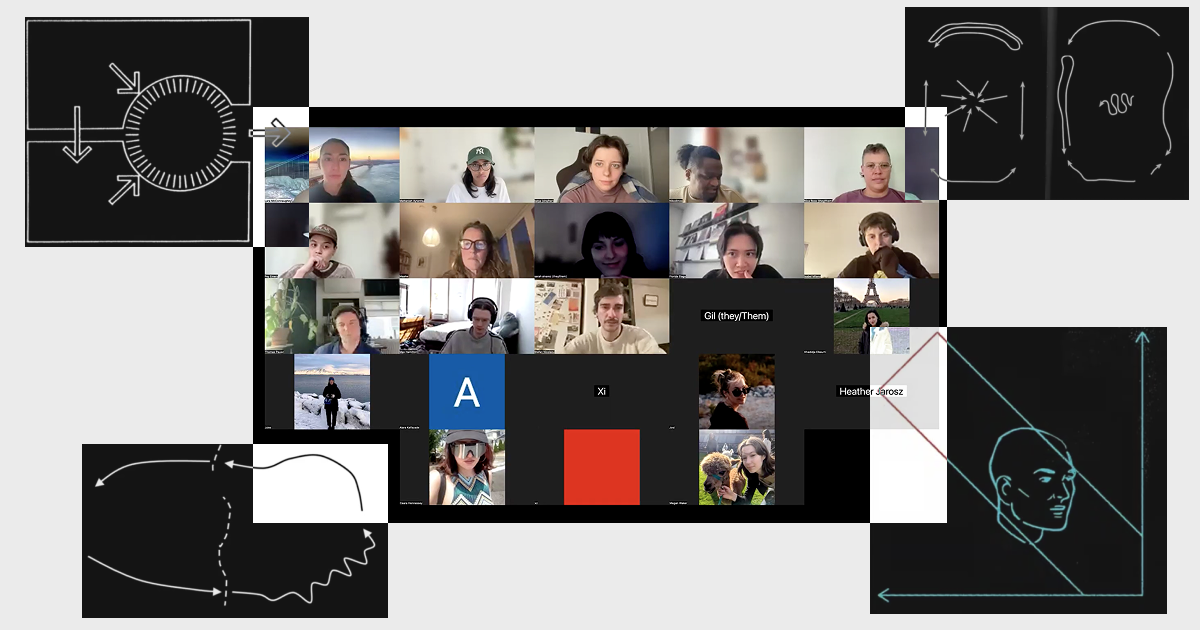
Form/Flow/Feel: Visualizing inner and outer systems, from emotion to environment was a five-week online class I designed and co-taught with Lara McConnaughy at the School for Poetic Computation in spring 2026. Eighteen students used p5.js, journaling, and personal and environmental data to build diagrams and patterns for mapping memory, emotion, land, and time.
The course kept returning to one question in wider and wider forms: who authored the rules you’re inside, and what happens when you can see them?
Systems + Sensibilities
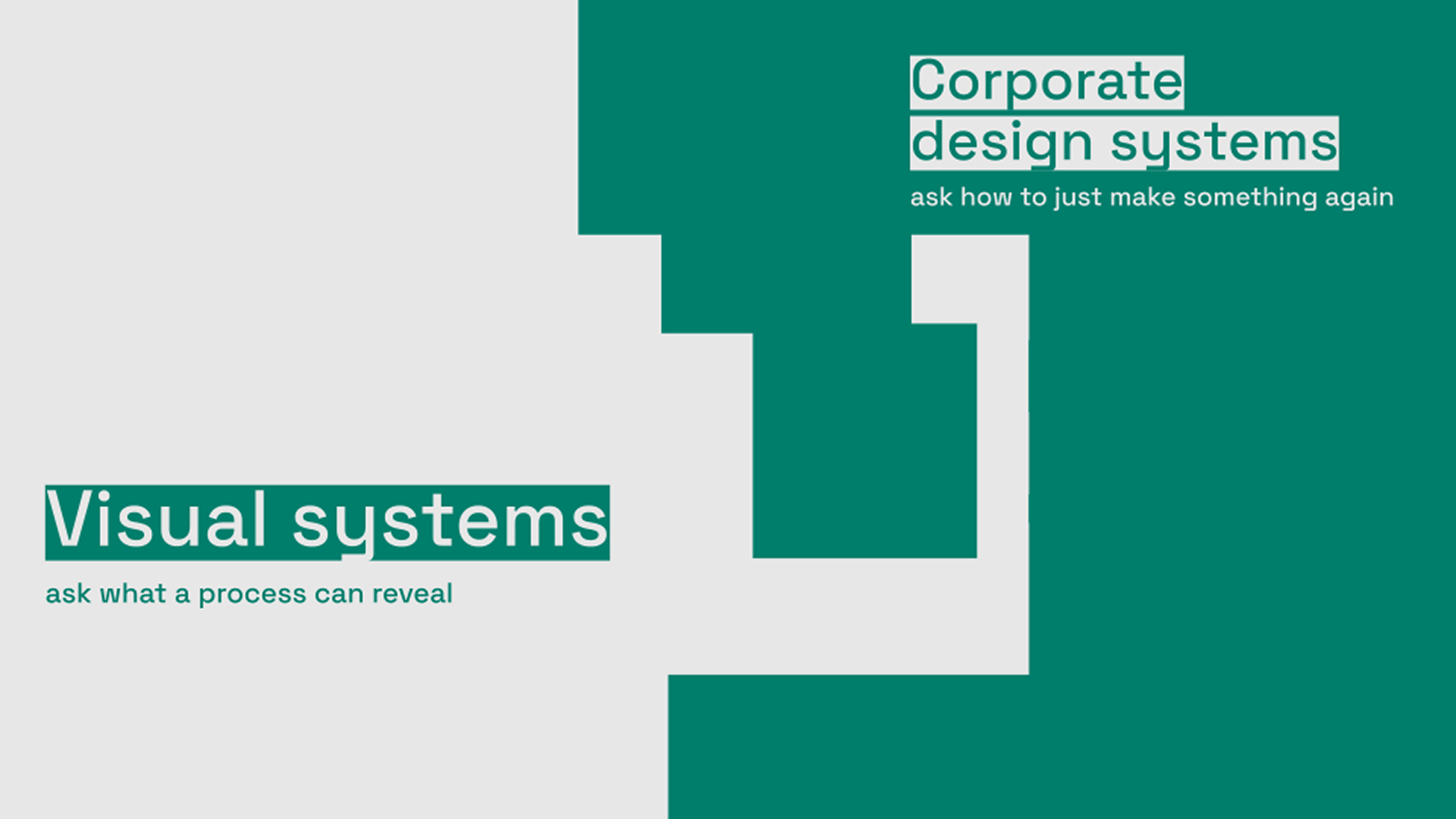
That distinction ran under all five weeks. A corporate design system exists to close the gap between intention and output. It’s built for consistency, an assembly line making the same thing reliably again and again. The visual systems this course is about run the other way. You set a few conditions in motion and watch them evolve, sometimes into things you didn’t predict. One asks how to make something again. The other asks what a process can reveal. We spent the course on the second.
At first the rules were ours to make. On a shared digital canvas in the first session, eighteen people invented a rule set in real time and watched it start responding to itself.
A line has to touch another line. No one can use red.A diagonal line must have a pink circle at the end.
Within minutes the communal drawing was no longer just a drawing. It was a small society negotiating what was allowed, watching the rules reshape what could happen next. We looked at how a fixed instruction can still produce a different result every time it’s carried out, and at geometric marks that recurred across 30,000 years of European cave walls with no committee ever deciding on them. Some rules we explicitly write, while other rules emerge through a state of shared conditions.
Modes of Repetition
Repetition is what makes a rule visible in the first place. A single fern frond tells you nothing, but the same branching move repeated at every scale becomes the whole plant, the same way it becomes lightning finding its path or the arteries branching inside you right now. We started there because it pushes back on the assumption that intricate designs need complicated instructions. They need one good rule and the willingness to repeat it.
Repetition also carries knowledge across generations. In a Ba-ila settlement in Zambia, the whole village is a ring of rings of rings, the same nested form from the single house up to the entire community, and the recursion isn’t decoration. It’s how the culture encodes a relationship of care at every scale. We spent time with references like this from traditions none of us belong to, always naming that a translation into a word like “fractal” is useful and is also, at times, flattening.
Mapping the Personal
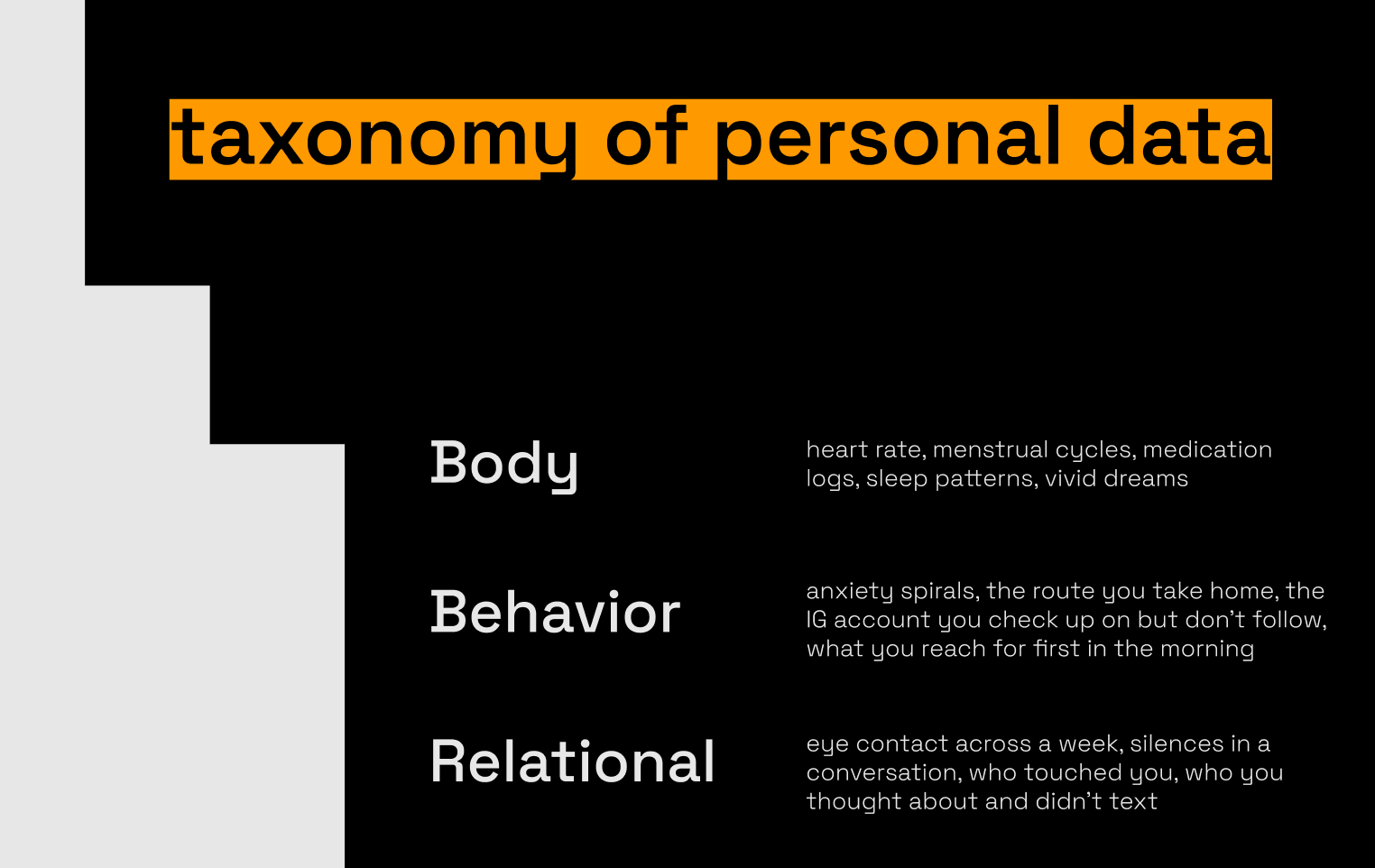
Then the material turned inward. The things you already track without meaning to, a mood, a route home, who you text back first, are a kind of rule set you didn’t know you’d written. Students tracked something from their own lives and ran straight into how much the tracking left out. Getting the data was never the hard part. The hard part was deciding what was worth noticing, and sitting with everything a number leaves out.
World as Input
And then the rules stopped being ours at all. External data arrives already assembled by someone else: a weather feed, a tide chart, an archive of eclipse photographs. Someone chose the instrument, the sampling interval, the units, long before it reached you. The work isn’t to take it as neutral fact. It’s to steward someone else’s partial frame: notice what’s in it, notice what’s left out, decide what your own system does inside it.
People have done exactly this for a very long time. A Marshall Islands stick chart, coconut fronds tied around shells, is a body of ocean-swell knowledge you hold in your hands and read with your fingers, data and instrument and map at once. That was the week the class left the screen, and students started reaching toward sound, motion, sculpture, print, whatever form their system actually wanted.
I taught my own pipeline as the worked example. Take Root Among the Stars began as a sketchbook of circles I drew for weeks without knowing what they were for — and that drawing was not a precursor to the work, it was the work at that point. Visualization can be research; sometimes the form is how you find out what you think. What opened it up was external data: eclipse photographs from the US Naval Observatory archive, pulled through Internet Archive’s Python library, then joined on date to Earth Orientation Parameters from the IERS — polar motion and rotational corrections, the small gap between where the model said the planet would be and where it was measured to be. The same system later took physical form in Where We Land.
That is the move the whole week was about, shown end to end: a system you already own meeting data from somewhere else, and becoming something you could not have arrived at alone.
Assemblies + Reflections
We’d started the course inside the biggest system we all live in and forget was built: language, a set of rules for what can be said, none of which we wrote. The whole course was that one move in different materials. Learning to see the systems you’re already standing in, and to build new ways of translating from inside them.
In the last week, students showed what that looks like made. Some of it in code, some in sound, some in objects and print. Some were finished. Many were fragments: a working sketch with a clear reason to exist, a notebook of attempts with one thing in it the maker was proud of. Finished never meant polished here. It meant you could say what you made and what decisions were inside it.
Articulable but not always resolved.
Course Design
Shape of a Session
All ten sessions across the two sections ran the same three-hour shape, so that the thing changing week to week was the material and never the format. Students knew where they were at any moment, which is what made it safe to not know what you were making yet.
Arrival and a warm-up prompt — journaling or sketching, before any screen.Framing and discussion — references, ideas, group conversation.Break.Live coding — a guided walkthrough of that week's technique.Studio — hands-on time, with us in the room.Share-out and closing reflection.
Putting the journaling before the framing mattered. It meant the first thing anyone did each week was notice something in their own life, not react to something we had put on a slide.
On AI
Teaching creative coding in 2026 meant taking a position, so I took one explicitly rather than letting it go unsaid. Using AI to understand code that already exists is a different action from using AI to generate code you have not thought through. The first is reading comprehension. The second skips the part where you think.
For students newer to code, the struggle is the point — friction is where your thinking enters the code, and bugs are not a failure mode of programming. For fluent students the risk runs the other way: it becomes very easy to ship something that bypassed your thinking entirely. The friction beginners are being protected from is the friction I asked the experienced coders to deliberately keep. Pick one part of your process where you do not let the tool in. That is the part that stays yours.
The underlying claim is that we were not making products. We were using code as a way to attend to things — and if the attending gets delegated, there is nothing left to look at.
References
Each week was anchored in work from well outside creative coding, and we named every time that a translation into our vocabulary was useful and also flattening.
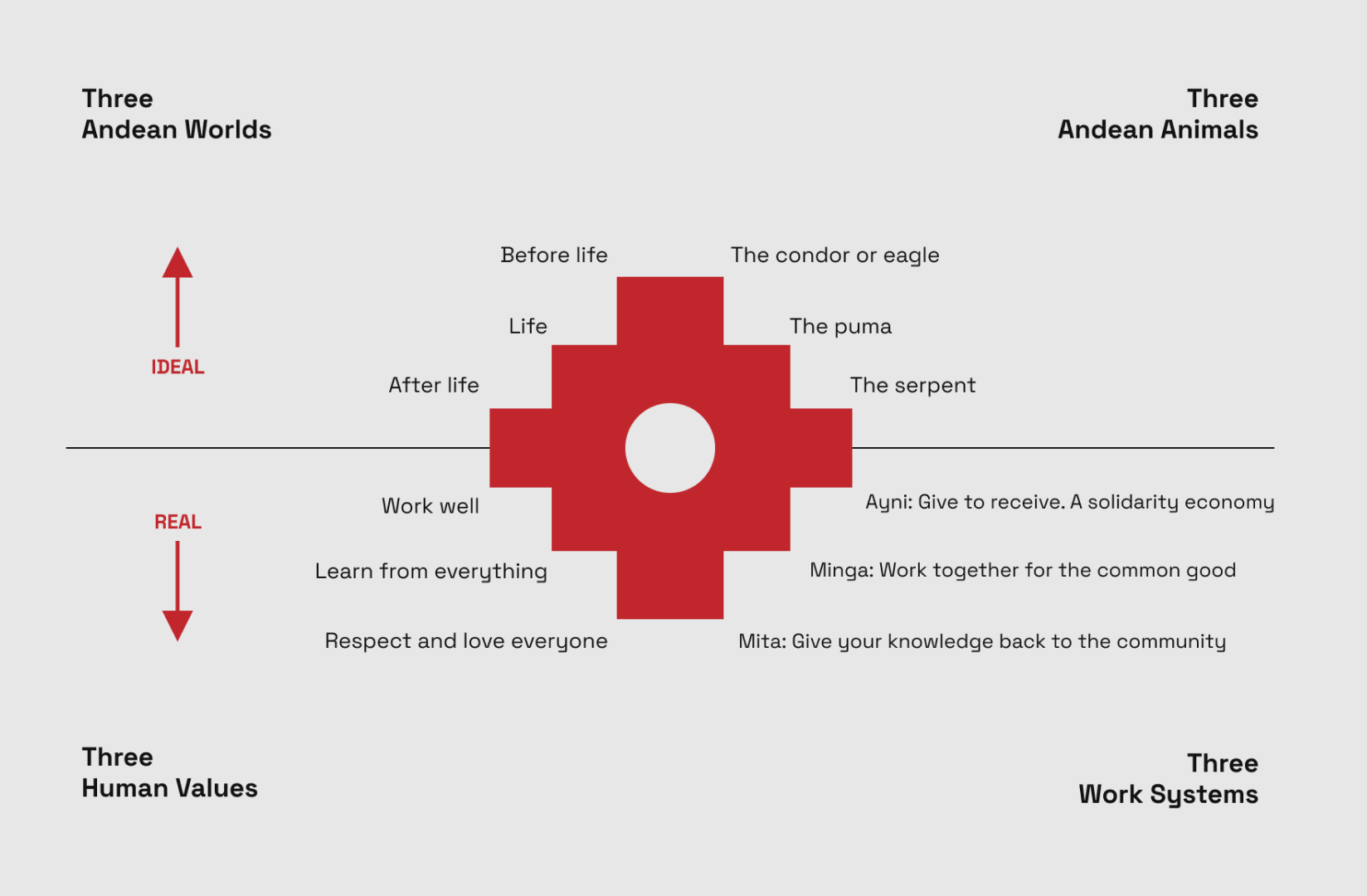
Sol LeWitt — the instruction as a score, executable by anyone, different every time.The geometric marks recurring across 30,000 years of European cave walls, with no committee deciding on them.Ron Eglash on the Ba-ila settlement and on Kente — recursion as a way a culture encodes care at every scale.La chacana, the Andean cross, holding four triads at once in a single stepped form.Vera Molnar — Interruptions, Des Ordres, Machine Imaginaire. Rule-breaking as a rule.Dear Data, Giorgia Lupi and Stefanie Posavec — a year of hand-drawn personal data by post.Bamana sand divination — a generative system centuries older than the computer.Marshall Islands stick charts — data, instrument, and map at once, read with the fingers.Nathalie Miebach, translating weather data into woven sculpture and score.Spencer Finch, for personal measurement as a way of making a place.
Form/Flow/Feel ran in two sections across April 2026 at SFPC. The full session listing, including the week-by-week outline, is at sfpc.study.