Where We Land
Discipline: SCULPTURE, HARDWARE, DESIGN
Tools: ESP32, Arduino, CNC Motors, CAD, Processing
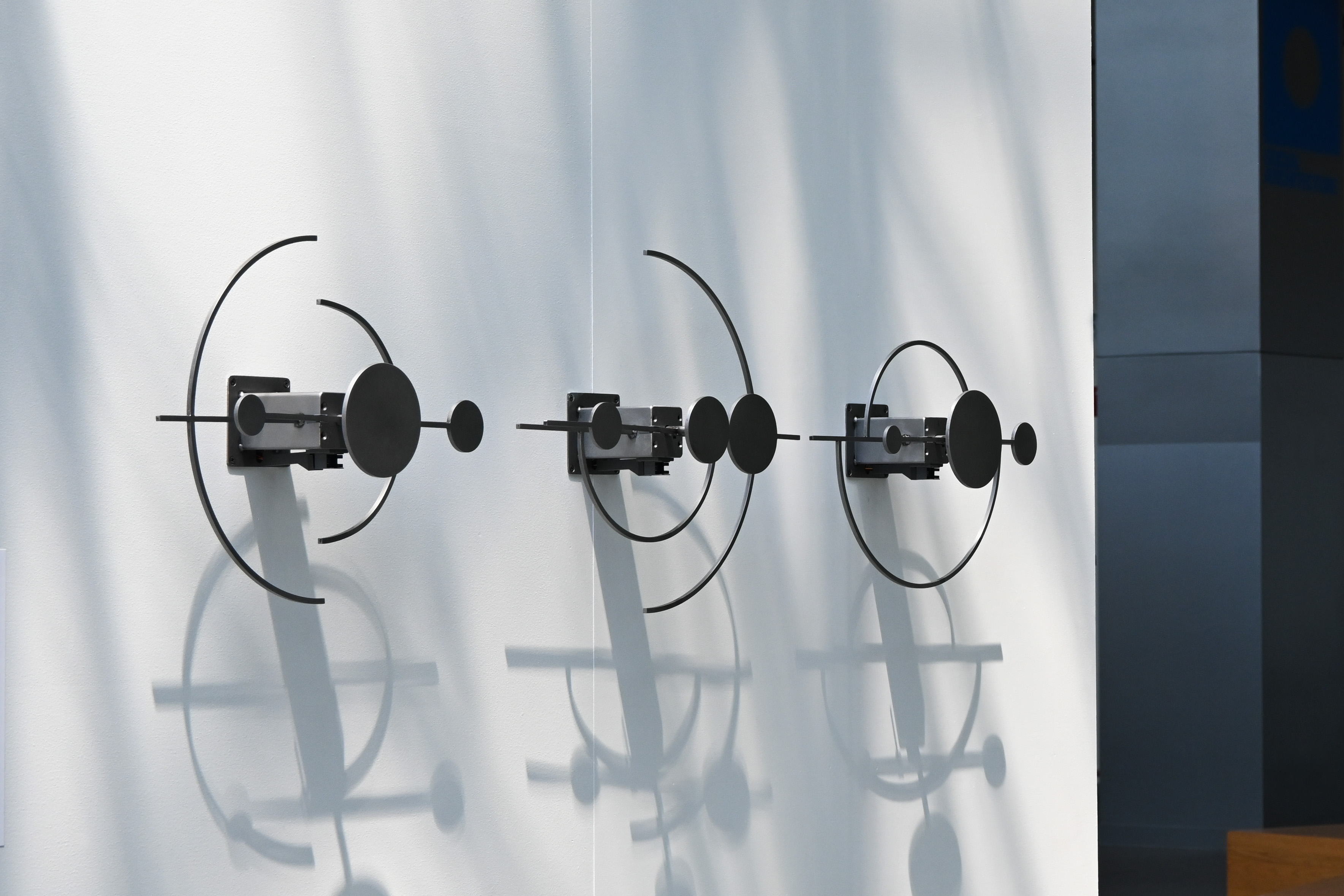
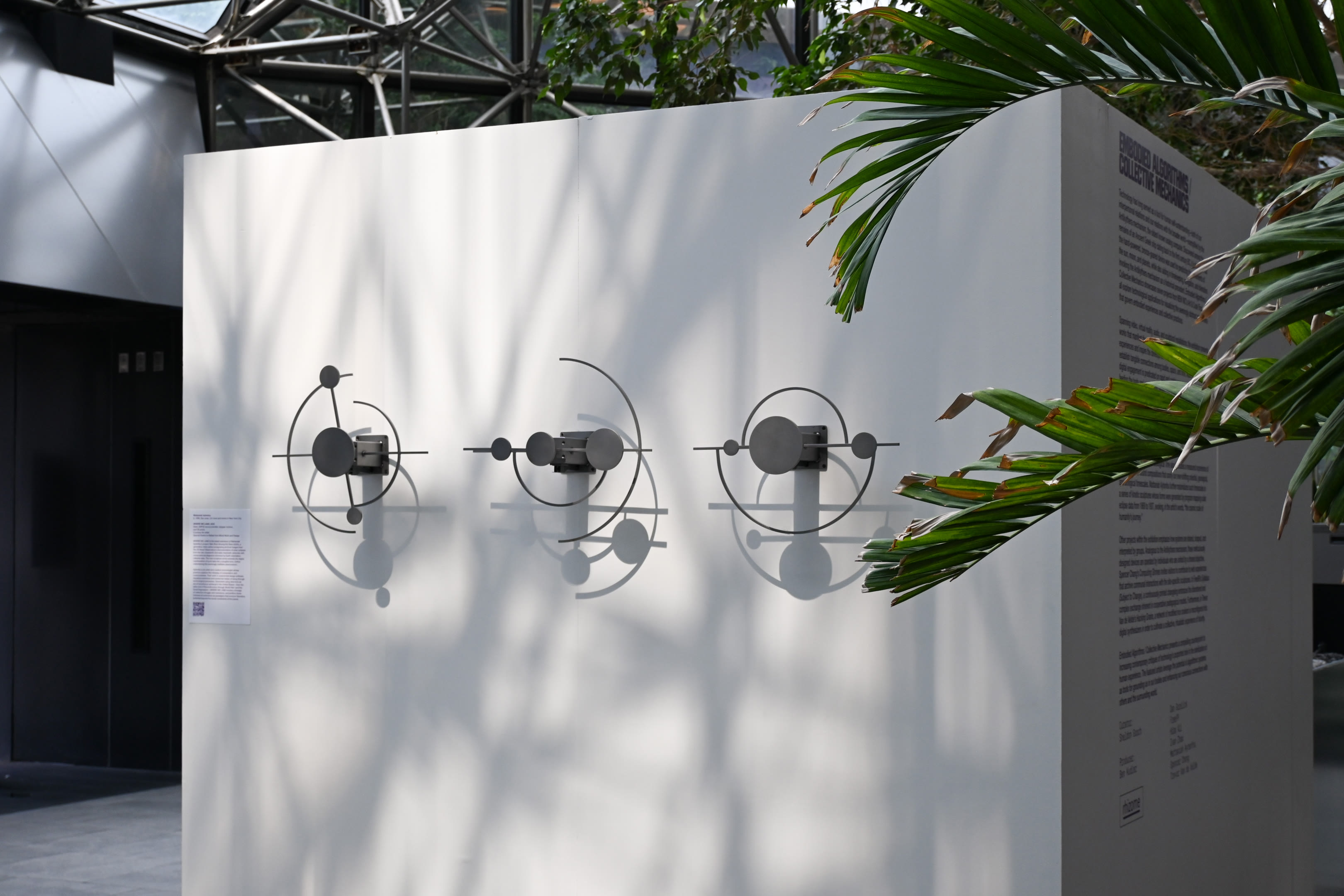
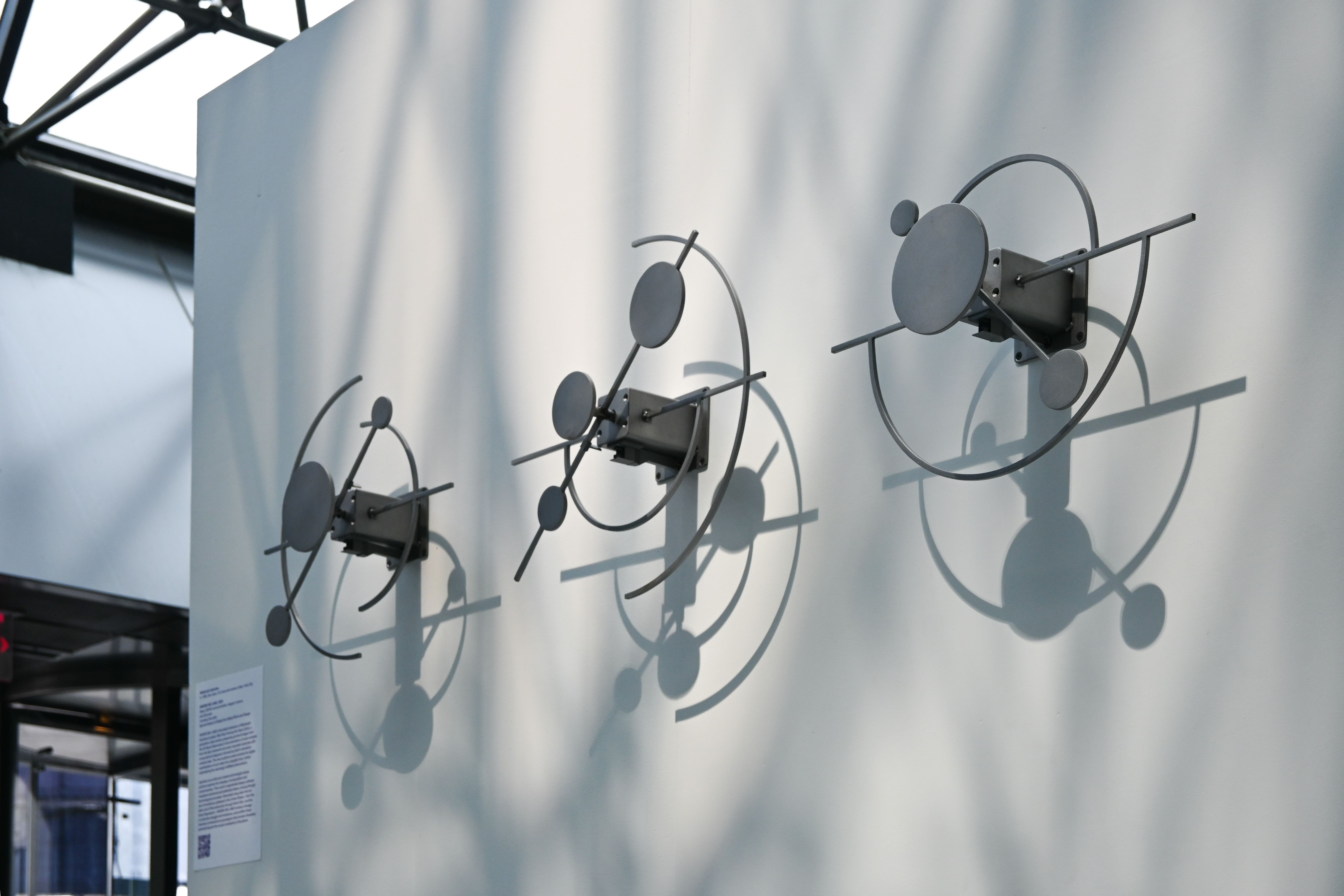
WHERE WE LAND is a sculptural work that transforms celestial data into shifting meditations on time and memory. Its form emerges from my generative series TAKE ROOT AMONG THE STARS, translating planetary patterns into physical structure. By moving from code to material, the sculpture gives shape to rhythms that are both cosmic and human: cycles of shadow and light, loss and renewal, struggle and persistence.
The piece reflects on the histories we inherit and the futures we imagine. Just as solar eclipses signal a brief shift in perspective before the return of light, the sculpture gestures toward the possibility of transformation in every cycle. Its form becomes a meditative anchor, inviting viewers to consider their own position within broader arcs of becoming.
Concept
At its core, WHERE WE LAND is about resilience and orientation. It acknowledges the enduring presence of struggle while offering pathways toward care, imagination, and liberation. The sculpture is not a fixed monument but a marker within a continuum, a reminder that movements evolve and dreams can be replanted across generations.
The work invites stillness but also forward motion: a reminder that we are always in orbit, always landing, always beginning again. In that rhythm lies both peace and possibility, the chance to imagine worlds beyond survival and to see ourselves as participants in cycles much larger than our own. Healing, creativity, love, memory, growth, and history move in cycles-each return offering renewal, each loop an invitation to find peace within its flow.
Hardware
Motors + Fabrication
The piece is driven by three stepper motors, each paired with its own driver and controlled by a single ESP32 microcontroller. During development I prototyped motion and scale with small 3D-printed models so I could experiment with timing, range, and balance before committing to metal. For the final build I worked closely with a local metalsmith to fabricate the full-scale arms and mounting plates in steel. That collaboration was essential: the metalwork ensured the structure was stiff, the mountings were precise, and the arms stayed aligned under slow, continuous motion - all of which let the sculpture move gently and reliably in a gallery setting.
Each axis also has a simple sensing arrangement (an IR sensor and a small physical tab) and a mechanical limit switch. These sensors are only used to establish repeatable starting positions and to protect the mechanism; they keep the electronics and metalwork coordinated so motion stays predictable over long runs.
Finding "Home"
CNC motors don't know their absolute angle when they power on, so the sculpture performs a short automatic routine at startup to find a reference position. On power-up the arms rotate slowly until the IR/ limit sensor detects a small tab on the arm. The code then backs off a little and reapproaches the sensor to confirm the trigger (a simple debounce), and finally sets that location as the zero or home position.
Software
Sequence System
Control logic is organized as a "choreography" engine made of small, reusable building blocks. Rather than sending one big blocking command that freezes the controller, the system issues many small, concurrent instructions so all three axes can run together while the program remains responsive. There are a few key primitives you'll see referenced in the code: a parallel move helper for going to absolute angles, routines that add relative offsets in staged sequences (cascades), and a homing state machine that handles the sensor backing-off and debounce behavior.
A practical design choice was to keep absolute positioning and relative moves separate. Absolute moves are used when the sculpture needs to go to a specific resting or exhibition angle; relative moves are used for generative gestures that "carry memory" from one cycle to the next. That separation makes it easy to compose behaviors - you can layer an accumulating, memory-like motion over a reliable reset behavior without conflating their logic.
Choreography + Safety
The motion routines are designed around accumulation and return: some sequences gently add offsets to accumulate a sense of history, while others bring the system back to calm. Staggered start times and overlapping durations create echoes and slow phase shifts that feel organic rather than mechanical. Crucially, the software includes a cooldown manager and conservative acceleration profiles. At regular intervals the system will pause the choreography and move the arms into a safe resting angle at low speed to prevent motor overheating and to avoid abrupt mechanical stress. Those safety choices - slow homing, careful acceleration, and timed cooldowns - were implemented specifically to protect the mounted arms and to keep the piece feeling meditative, not mechanical.